
 07424380227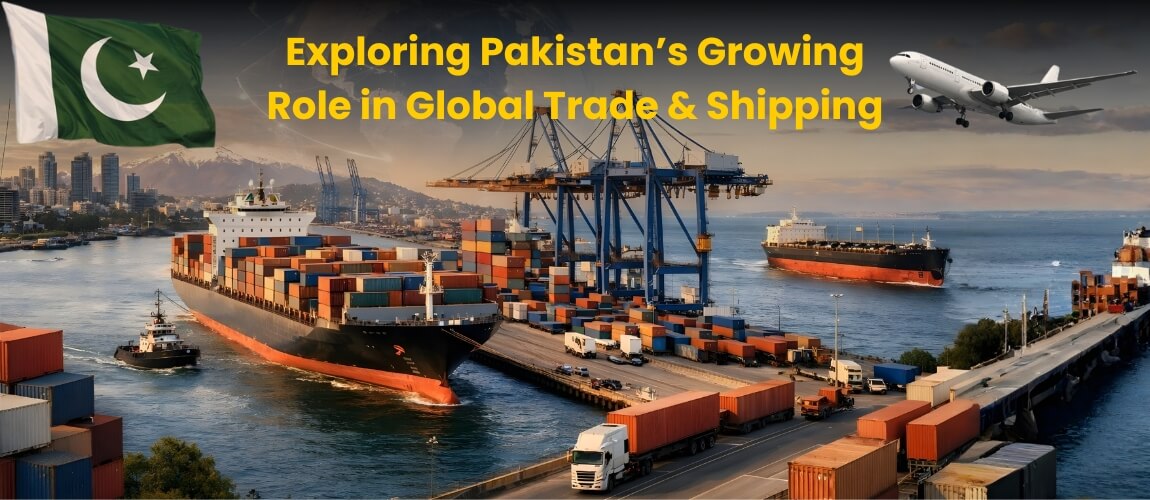
Pakistan is not equipped to handle the economic and development challenges that are commonly viewed as necessary for any developing nation. Why? Land, sea, and air assets were not effectively utilized by the federal government. Why? The trade and payments balance, along with inflation, unemployment, and program inconsistency, are the primary drivers of this. Why? For years, the maritime industry has been a source of destruction in this particular area. The only coastal resource that is currently being utilized today is fisheries, in contrast to the maritime transportation industry. The maritime industry of Pakistan is losing its economic footing due to the escalating risks associated with maritime fragility, which results in reduced trade and taxes.’ The maritime industry of Pakistan is examined to determine how it compares to that of its land and maritime neighbors, including India, Iran, and Oman.
The investigation is unique as it scrutinizes the current state of marine trade with Pakistan’s maritime neighbors to determine if the ongoing decline in trade is due to regional factors or individual circumstances.
Strategic Geography: Where East Meets West
The management of flag carriers and cargo transportation are both handled by PNSC. In order to meet the current and future needs of Pakistan’s shipping business, PNSC must have a comprehensive understanding of its boats, fleet, sizes, age range, and scale. Hence, PNSC would be subjected to a thorough examination.
Ports, and especially the ability to accommodate large ships, are beneficial in that they generate revenue for the national government while also improving economic stability. Examine the functioning of Pakistan’s seaports, their suitability for storing vessels, the volume of port calls, throughput of container ports, and the workforce of maritime companies that support local and global marine industries in Pakistan. Pakistan’s marine commerce may be affected by a trade-off between fuel prices and port fees. Strengthening and enhancing bilateral trade connections, which impact political-economic relationships among nations, would facilitate the evaluation of internal and foreign policy viewpoints.
Major Ports Driving Global Connectivity
Pakistan’s economic and naval capabilities are not keeping pace.? Quantitative information was derived from reliable sources such as government surveys and documents from Pakistan, regional and international companies that publish data annually, UN-affiliated institutions, naval organizations and supervisory bodies, monetary and security institutions in various forms, conference papers, reports, academic articles, theses, and scholarly journals. Collecting this data was primarily focused on measuring Pakistan’s maritime strength relative to other nations.
Future Regional Hub: Gwadar Port
Port Stevedore Ahmed experienced a significant increase in business volume, which encompassed agricultural products and containerized goods. The latest KASB report from KTrade Securities Limited indicates that Gwadar Port’s container throughput in the first half of this year was 1,162, which is much more than what we had anticipated. This is not a particularly impressive statistic. 506,800 tons of TEUs and bulk cargo were processed.
Karachi & Port Qasim: Traditional Gateways with New Opportunities
Several issues have prevented the true potential of these ports from being exploited. In an effort to obtain strategic direction and improve the operational capacity and efficiency of ports, the government has made several significant decisions. By 30. Professional CEOs will be appointed to oversee ports activities in January 2025. Dredging can be used to increase navigable depth, accommodate heavy-displacement commercial vessels, and increase cargo handling capacity at KPT and PQA. Larger cargo ships that move goods between major trade routes in the Indian Ocean and smaller regional ports will be attracted by this.’ The approval of dredging plans has been granted to increase the transshipment capacity of both ports.
Direct Shipping Routes To Europe & Africa
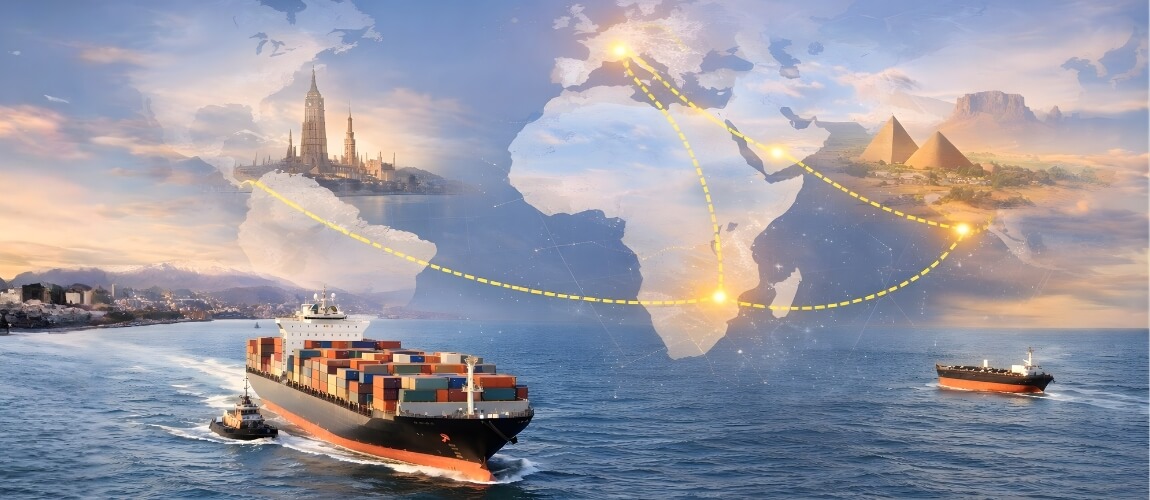
To benefit from the positive trade relations between Pakistan and the EU, businesses must be aware of the different types of overseas courier and freight services. What are they? International shipping requirements are unique to each service.
Shipping methods are also influenced by cost, transit times, cargo characteristics (such as container size and weight), volume, and even frequency.
A reliable and efficient way to receive international deliveries from Pakistan through courier services.
Goods sent via courier to international locations are typically delivered in days and weeks, making them a desirable choice for those seeking reliable and speedy shipping.
Freight transportation to Europe is a perfect solution for bulk orders.
In contrast, sea freight and air freight are the primary options for businesses interested in shipping freight to Europe. Cost-effective: Sea freight is often more efficient and can transport large, bulky items as well as heavy shipments.
The Shipping Sector’s Economic Impact.
Moreover, after the military increase between Pakistan and India in 2025, shipping lines were forced to clear their cargo before departing for Indian ports due To be limited by India’s ban on goods imported from or destined for Pakistan. Karachi calls were suspended by multiple shipping lines, resulting in an estimated weekly disruption of twenty-foot equivalent units (TEUs) in export volume from Karachin. This was the result.
Therefore, it is imperative to build a resilient and competitive national fleet that will serve Pakistan’s economic advantage and its national safety.
Modernization & Digitalization Efforts.
The PNSC vessels are exclusively in liquid and dry bulk mode. The national dry bulk trade was larger (67.17 million tons) than the liquid cargo (29.20 million tonnes) in 2024, but PNSC’s share for liquid freight was only 32%, while its share of dry wholesale is still just 2%. PNSC’s dry bulk carriers do not meet the international deadweight capacity requirement, which accounts for this gap. The Supramax ships manufactured by PNSC are capable of carrying roughly 52,951 tons, which is less than the global average of 58,328 tons. In Figure 2, it can be seen that PNSC’s revenue is consistently driven by liquid bulk, which has increased from Rs. 6,908. 36,932. However, the revenues from dry bulk and slot charters are still modest. Furthermore, PNSC currently does not have container ships for general cargo trade.
Regional Leadership and Future Prospects
Even with natural benefits, Pakistan’s maritime sector is not fully utilized and has a low impact on the country’ economic base. The economic growth of Pakistan, which is primarily dependent on agriculture and land, has been driven by its agricultural resources. As a result of the unprecedented growth of human population and their heavy reliance on land resources, both economic growth has been stunted while terrestrial reserves have been exhausted. Pakistan’s maritime sector requires revitalization to achieve economic stability. What is more, it can effectively leverage national maritime potential.
The Task Force on Revamping Pakistan’s Maritime Sector has been given the green light by the Prime Minister of Pakistan for a series of reforms in the sector. The proposed schemes will aim to improve the efficiency and competitiveness of various industries in the maritime sector.